Showing posts with label plaugue. Show all posts
Showing posts with label plaugue. Show all posts
Wednesday, 19 October 2011

Saturday, 15 October 2011
15/10/11 - 32 people infected in H1N1 outbreak in Nicaragua
 NICARAGUA – At least 32 people have been infected in a flare-up of the H1N1 swine flu virus in Nicaragua over the last week, according to the health ministry. All of those diagnosed with the disease are in stable condition in public hospitals or have been discharged, public health spokesman Carlos Saez told local media Thursday. The outbreak has been concentrated in the capital Managua and the adjacent Leon department. “People should not be alarmed, because the health ministry has taken appropriate measures” to control the virus, Saez said. Swine flu — so named because it was first identified in pigs — has killed some 18,500 people since emerging in an April 2009 pandemic, according to the World Health Organization (WHO). Nicaragua reported 11 deaths in 2009, out of some 2,300 people infected. –Terra Daily
Thursday, 6 October 2011
6/10/11 - Listeria deaths rise to 18, outbreak spreads to 20 states
 DENVER - The outbreak of listeriosis linked to whole Rocky Ford-brand cantaloupes from Colorado’s Jensen Farms is now more than six times larger than it was when the first public warnings about contaminated melons were issued just three weeks ago. In its eighth update on the rapidly expanding outbreak, the Centers for Disease Control and Prevention (CDC) in Atlanta said 100 people from 20 states have been confirmed infected with one or more of the four outbreak associated strains of Listeria monocytogenes. Two more deaths in Colorado and one in Kansas were the additional fatalities since CDC’s last update on Sept. 29, when 15 deaths were reported. Arkansas reported its first case linked to the outbreak. The listeriosis outbreak is responsible for five deaths each in Colorado and New Mexico and two each in Kansas and Texas. States with one death each are Maryland, Missouri, Nebraska and Oklahoma. More Listeria-connected deaths are likely and may well have already occurred. CDC’s update is good through 11 a.m. Oct. 3. Media reports say there have been other deaths that are not yet included in the CDC totals. For example, Louisiana’s Department of Health and Hospitals is investigating the death of an 87-year-old Baton Rouge woman whose death was caused by a Listeria infection to see if it is connected to the outbreak strains. A similar death is under investigation in Wyoming. While the outbreak may not have yet reached its zenith, CDC’s profiling of the victims is telling a story. Listeria poises the greatest threat to the elderly, pregnant women and those with compromised immune systems. CDC’s data shows that illnesses began on or after July 31 and involved people from 35 to 96 years old, with a median age of 79. Most are over age 60. For the 93 people that CDC has information on, 98 percent have required hospitalization. Forty-nine percent of the victims are women, including two who are pregnant. Listeria can cause miscarriage or stillbirths in pregnant women. CDC says “the outcome of each pregnancy is being monitored.” –Food and Safety News
Thursday, 15 September 2011
15/9/11 - Chile battles youth unrest and typhoid fever outbreak
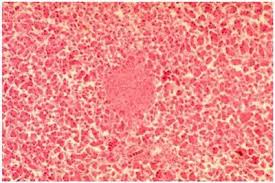 September 15, 2011 – SANTIAGO – Chile’s problems dealing with youth unrest over slow education reforms are being compounded by concerns the capital may be in the grip of a typhoid fever outbreak. The government has battled to enforce restraint on law enforcement agencies amid angry student-led protests, which have disrupted urban centers across the country for more than a month. The reforms demanded by youth groups are nowhere near being implemented and protests continue to simmer with support from teachers and workers unions. Now authorities are faced with the more immediate risk of typhoid. Health authorities issued repeated alerts for tougher hygiene checks and controls after they found several people infected and seriously ill with typhoid in the western metropolitan area of Santiago. At least seven cases were confirmed by the Public Health Institute but there were no immediate reports of fatalities. “Typhoid fever is an acute infectious disease triggered by a salmonella bacteria strain,” Institute Director Maria Teresa Valenzuela said. In most cases the infection is caused by consumption of contaminated food and drink or fruit and vegetables grown in areas where contaminated water is used in irrigation. Typhoid fever produces symptoms of high fever, diarrhea or intense headaches. The Santiago region has been prone to typhoid outbreaks since the 1990s when incidence of the disease caused up to 190 cases a year. –Terra Daily
15/9/11 - Scientists warn strains of influenza becoming resistant to common treatments
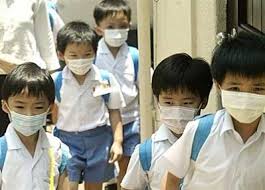 September 15, 2011 – LONDON – “Certain strains of influenza are becoming resistant to common treatments,” said Ira M. Longini, a professor of biostatistics in the University of Florida College of Public Health and Health Professions, the UF College of Medicine, and the UF Emerging Pathogens Institute. “We’ve been able to map out globally how this phenomenon is happening.” Longini is among a team of researchers who have published this month in the Royal Society journal Interface and explain how seasonal H1N1 influenza became resistant to oseltamivir, otherwise known as Tamiflu, the most widely used antiviral agent for treating and preventing flu. The scientists say that a combination of genetic mutations and human migration through air travel can lead to the rapid global spread of drug-resistant strains. “If you see resistant strains in parts of the world where no one is taking antiviral drugs, that’s the smoking gun that the resistant strain must be transmitting,” said Longini, who also worked on this research at the Fred Hutchinson Cancer Research Center in Seattle. In some situations, drug-resistant bacteria and viruses can spread when drugs are overused. The scientists explored this theory using a mathematical model that simulates the spread of influenza across 321 cities connected by air travel. Using this model, they found that oseltamivir use had not been nearly widespread enough to promote the spread of antiviral resistance after it arose. However, the resistant strain probably originated in one person taking the drug. “Oseltamivir is an important prophylactic, or preventative agent, against future flu viruses, including a potential H5N1, or ‘bird flu,’ pandemic,” said Dennis Chao, the lead author of the paper and a staff scientist at the Center for Statistics and Quantitative Infectious Diseases at the Fred Hutchinson Cancer Research Center. However, influenza can mutate, making the drug less effective. It had been believed that this mutation would not spread because it makes the flu less transmissible in people not taking the drug. “The fact that it spread so quickly in seasonal H1N1 between 2006 and 2008 took everyone by surprise,” Chao said. The researchers say that the mutation may have “hitchhiked” on one or more other mutations that made the drug-resistant influenza strain more transmissible. They suggest that because strains of influenza turn over so rapidly, there are many opportunities for these types of mutations to arise in an otherwise highly transmissible strain and become widespread, and it can become the dominant strain within a couple of years, making the drug useless. “For the next pandemic, we should have all the available drugs at our disposal as a first line of defense to both prevent infection and to treat the most vulnerable,” Longini said. “Or else, the chance that the next pandemic influenza strain is resistant goes up. We know something like ‘Contagion’ could happen for influenza.” –Physics.org
Wednesday, 14 September 2011
14/9/11 - Dangerous TB spreading at alarming rate in Europe warns WHO
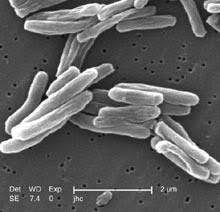 September 14, 2011 – LONDON – Multidrug-resistant and extensively drug-resistant forms of tuberculosis (TB) are spreading at an alarming rate in Europe and will kill thousands unless health authorities halt the pandemic, the World Health Organization (WHO) said on Wednesday. Launching a new regional plan to find, diagnose and treat cases of the airborne infectious disease more effectively, the WHO’s European director warned that complacency had allowed a resurgence of TB and failure to tackle it now would mean huge human and economic costs in the future. “TB is an old disease that never went away, and now it is evolving with a vengeance,” said Zsuzsanna Jakab, the WHO’s Regional Director for Europe. “The numbers are scary,” Lucica Ditiu, executive secretary of the Stop TB Partnership told a news conference in London. “This is a very dramatic situation.” TB is currently a worldwide pandemic that kills around 1.7 million people a year. The infection is caused by the bacterium Mycobacterium tuberculosis and destroys patients’ lung tissue, causing them to cough up the bacteria, which then spreads through the air and can be inhaled by others. Cases of multidrug-resistant (MDR-TB) and extensively drug-resistant TB (XDR-TB) — where the infections are resistant to first-line and then second-line antibiotic treatments — are spreading fast, with about 440,000 new patients every year around the world. According to the WHO and Stop TB, 15 of the 27 countries with the highest burden of MDR-TB are in the WHO’s European region, which includes 53 countries in Europe and Central Asia. More than 80,000 MDR-TB cases occur in the region each year — almost a fifth of the world’s total. The WHO said precise figures for XDR-TB are not available because most countries lack the facilities to diagnose it, but officially reported cases of XDR-TB increased six-fold between 2008 and 2009. Rates are highest in Eastern Europe and Central Asia, but many countries in Western Europe have increasing rates of TB and drug-resistant TB, Ditiu said. Britain’s capital, London, has the highest TB rate of any capital city in Western Europe with around 3,500 cases a year, 2 percent of which are MDR-TB. Treating even normal TB is a long and unpleasant process, with patients needing to take a combination of powerful antibiotics for 6 months. Many patients fail to correctly complete the course of medicines, a factor which has fueled a rise in drug-resistant forms of the disease. Treatment regimes for MDR-TB and XDR-TB can stretch into two or more years, costing up to $16,000 in drugs alone and up to $200,000 to $300,000 per patient if isolation hospital costs, medical care and other resources are taken into account. Experts say around 7 percent of patients with straightforward TB die, and that death rate rises to around 50 percent of patients with drug-resistant forms. The WHO’s action plan for tackling tuberculosis emphasizes the need for doctors and patients to be more aware of the disease and its symptoms, to diagnose and treat cases promptly with the right drugs, and follow patients up over many months or years to ensure they take their medications. -Reuters – Bird Flu warning issued in August by UN
“As of 2010, drug-resistant TB has been identified in 57 countries. The mortality rate for patients infected with the extra-lethal variety of TB is 85%. The global arsenal of antibiotics used to treat drug-resistant strains of tuberculosis is failing one by one…Could another health crisis be looming on the horizon with one of nature’s most communicable killers? What would we do if a XDR-TB outbreak starting over-lapping with a deadly pandemic outbreak of influenza? –The Extinction Protocol,page 228
Saturday, 3 September 2011
3/9/11 0 CDC reports new swine-flu strain infections
 September 3, 2011 – ATLANTA – Two cases of a new strain of swine-flu related infection have been reported in young children, according to the Centers for Disease Control and Prevention Friday. The infections, identified in late August, involved an Indiana boy and girl from Pennsylvania, both under age 5. The particular strain the children contracted hasn’t been seen before, said Tom Skinner, CDC spokesman. While the CDC typically sees a few cases a year of H3N2 (an influenza A virus), usually as result of contact with swine, “what’s new is that it has picked up a gene from the H1N1 pandemic strain,” said Skinner. The two children had received flu vaccines in September 2010, which protected against H1N1, but wouldn’t protect against the new strain. In July, the boy was taken to a hospital emergency department with flulike symptoms of fever, cough and diarrhea, where a respiratory test confirmed influenza A (H3). The boy, who has multiple chronic health conditions, was briefly hospitalized. He had not been directly exposed to swine but a caretaker had been in direct contact with swine in the weeks before the boy became ill. In August, the girl was also taken to a hospital emergency department with similar symptoms and discharged. A few days before she became sick with a fever, cough and lethargy, she reportedly visited an agricultural fair where she was exposed to swine. Scientists found no specific link between the two cases. No additional human cases have been detected, the CDC reported. “There’s no evidence of sustained transmission from human to human,” Skinner said. “Investigations are ongoing to better understand the extent of the impact of these two cases on the public health.” Both children have recovered. -MSNBC
Sunday, 24 July 2011
24/7/11 - Cholera epidemic death toll in Dominican Republic reaches 87

July 23, 2011 – DOMINICAN REPUBLIC - Authorities in the Dominican Republic have announced that the death toll in the cholera epidemic that spread from Haiti has risen to 87. The health ministry said on Friday that the death toll had risen by 16 since July 8 to 87, AFP reported. The ministry also said there have been 773 new cases over the past week, for a total of 13,200 since the beginning of the epidemic, which spread to the Dominican Republic from Haiti in November 2010. The US Centers for Disease Control published an epidemiological study at the end of June, saying that UN troops from Nepal were responsible for the epidemic. Latin American countries have been far more careful since 1991, when an outbreak of cholera occurred in Peru and then moved into Bolivia, Brazil, Colombia, Ecuador, Guatemala, El Salvador and Mexico. The disease killed some 10,000 people in Latin America, according to the World Health Organization. –Press TV
24/7/11 - 5 indigenous children die of mystery infection, New Mexico
 Five children of the indigenous group Chimila died of a mysterious respiratory infection in the department of Magdalena, reported Radio Santa Fe Thursday.
According to the department's governor, Manuel Jose Bonett Locarno, the infection has yet to be "clearly defined" by hospitals in the region because members of the Chimila group have not allowed full access to the sick patients and corpses.
Locarno explained that there are at least 23 people who are presenting similar symptoms, and that they were transferred to different medical facilities in the region for treatment.
According to the report, a hospital in the city of Barranquilla accepted three young children who were in poor health condition.
A medical team has been sent to the department to assess the situation. Source
Subscribe to:
Posts (Atom)